Quick Answer
Market entry into Saudi Arabia follows five stages: market and regulatory research, choosing an entry mode (distributor, branch, LLC subsidiary, joint venture, or franchise), securing a MISA investment licence, registering the legal entity, and launching operations. For GCC nationals and GCC-owned companies, entry is simplified under the GCC Economic Agreement, which allows a faster registration path than for other foreign investors. Full market entry – from strategy to a licensed, operating entity – typically takes 8 to 16 weeks, depending on the entry mode and sector. Most investors commission a feasibility study before committing to an entry mode (see below).
Saudi Arabia is the largest consumer market in the GCC, and its economy has been growing steadily under Vision 2030 reforms that opened the door to 100% foreign ownership across most sectors. Real GDP grew 3.4% in Q1 2025, with non-oil sectors growing 4.9% and foreign investment inflows up 24% over the same period – figures worth confirming against the latest release before this blog is published, since the market moves quickly.
For companies based in the UAE, Qatar, Bahrain, Kuwait, and Oman, Saudi Arabia is usually the natural next step in regional expansion — geographically close, culturally familiar, and increasingly easy to enter thanks to the GCC Economic Agreement and Vision 2030 reforms. But “market entry” is not the same task as company registration. Entry strategy is the decision layer that comes first: which mode of entry fits your business, which sector rules apply, and what a realistic cost and timeline look like before you file any paperwork. Once that decision is made, business setup and registration is the next, separate stage (covered later in this guide).
This guide covers the five common entry modes, how to choose between them, GCC-specific advantages, realistic costs and timelines, and the mistakes that most often delay a Saudi market entry.
Why Saudi Arabia for GCC and International Market Entry
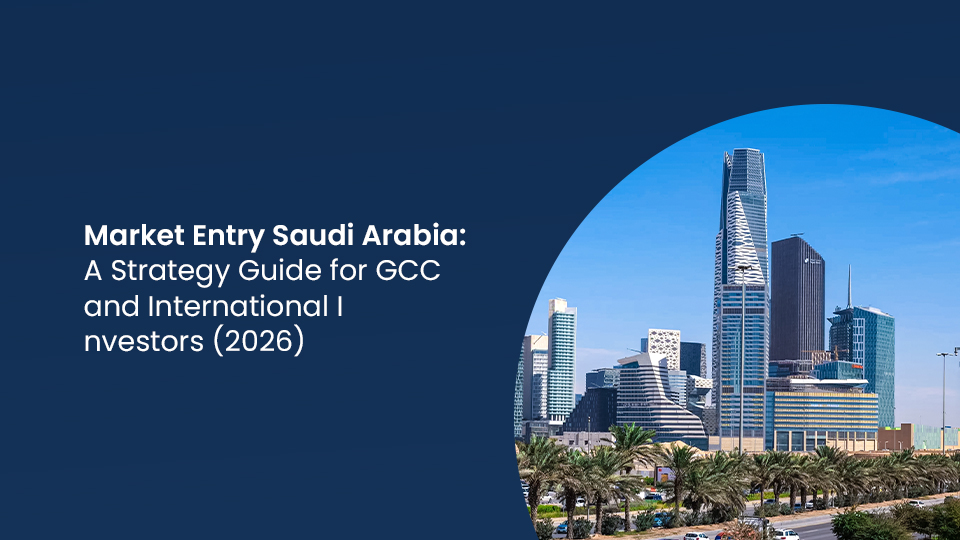
Saudi Arabia offers a scale that few markets in the region can match: a population approaching 35.3 million, a young and increasingly high-spending consumer base, and government-backed demand across construction, logistics, technology, and manufacturing tied to Vision 2030 giga-projects. For a fuller picture of the investment case — demographics, sector opportunities, and quality-of-life factors relevant to relocating staff — see our overview of why Saudi Arabia is the region’s leading investment destination.
Market Entry for GCC-Based Companies: What's Different
Companies headquartered in the UAE, Qatar, Bahrain, Kuwait, or Oman are not treated the same as other foreign investors when entering Saudi Arabia. The GCC Economic Agreement grants GCC nationals and GCC-majority-owned companies a simplified registration pathway in many sectors, alongside advantages that non-GCC investors do not get automatically.
| Factor | GCC-Based Investor | Non-GCC Foreign Investor |
|---|---|---|
| Ownership rules | GCC nationals often receive treatment similar to Saudi nationals in many sectors under GCC agreements, though sector-specific restrictions can still apply. | Foreign investors are generally subject to MISA licensing and sector-specific foreign ownership rules. |
| Registration pathway | GCC investors may benefit from simpler procedures in certain activities and are not always subject to the same foreign investment licensing requirements as non-GCC investors. | Typically follow the MISA license → company registration process for foreign-owned entities. |
| Logistics & travel | Geographic proximity, frequent flights, and regional trade links can facilitate operations. | Transit times and logistics may be longer depending on the investor's home country. |
| Cultural/regulatory familiarity | Shared Arabic language and similar business practices often create advantages. | May require more local market, legal, and cultural adaptation. |
Saudi Market Entry Modes Compared
Choosing the right entry mode is the single most consequential decision in market entry – it affects ownership, liability, tax treatment, and how fast you can start operating.
| Entry Mode | Foreign Ownership | Typical Setup Time* | Best For |
|---|---|---|---|
| Distributor / Commercial Agent | Local distributor holds operating entity | 2–6 weeks | Testing market demand with limited investment |
| Branch Office | Extension of foreign parent company | 6–12 weeks | Companies executing contracts or projects directly in Saudi Arabia |
| LLC Subsidiary | Up to 100% foreign ownership in many sectors | 4–12 weeks | Most international companies seeking a permanent Saudi presence |
| Joint Venture | Determined by agreement and sector regulations | 8–16 weeks | Sectors where local expertise, relationships, or shared investment are beneficial |
| Franchise | Franchisee-owned, franchisor-licensed | 4–10 weeks | Consumer, retail, hospitality, and F&B brands |
Companies headquartered in the UAE, Qatar, Bahrain, Kuwait, or Oman are not treated the same as other foreign investors when entering Saudi Arabia. The GCC Economic Agreement grants GCC nationals and GCC-majority-owned companies a simplified registration pathway in many sectors, alongside advantages that non-GCC investors do not get automatically.
The Market Entry Process, Step by Step
1. Market and Regulatory Research
Confirm demand, competitive landscape, and sector-specific licensing rules before committing to an entry mode. This is where a formal feasibility study earns its cost — it turns assumptions into evidence.
2. Choose Your Entry Mode
Weigh ownership, liability, timeline, and capital requirements against your strategic goal — testing the market, executing a single contract, or building a permanent operating base.
3. Secure a MISA Investment Licence
Non-Saudi investors (including most GCC-based companies outside specific simplified activities) need a Ministry of Investment Saudi Arabia licence before registering a legal entity. Licence type depends on your chosen activity and entry mode.
4. Register the Legal Entity
Commercial registration, Articles of Association, and municipal/activity licensing follow. Our business setup in Saudi Arabia guide covers this stage step by step, including documents, fees, and typical processing times.
5. Launch Operations
Bank account opening, Saudization staffing requirements, and activity-specific approvals (municipal, sector-regulator, or industrial) close out the process before you can trade.
Market Entry Costs in Saudi Arabia
Costs vary significantly by entry mode, sector, and city. As a planning baseline:
| Cost Item | Typical Range* | Notes |
|---|---|---|
| MISA investment licence | Activity-dependent | Fees vary by licence category, sector, and ownership structure. |
| Commercial registration | SAR 1,200–3,000 | Entity-type dependent; ongoing renewal/maintenance obligations apply. |
| Legal & advisory fees | SAR 15,000–60,000+ | Depends on entity structure, documentation, and transaction complexity. |
| Office / commercial address | SAR 20,000–80,000+ per year | Riyadh and Jeddah generally command premium rates. |
| Minimum capital | Activity-dependent | Certain regulated sectors may impose minimum capital requirements. |
Common Market Entry Mistakes
- Choosing an entry mode based on cost alone, without weighing liability, control, and exit flexibility.
- Assuming GCC familiarity removes the need for local legal and regulatory due diligence.
- Skipping a feasibility study and discovering sector, site, or financial constraints after registration is already underway.
- Underestimating Saudization (Nitaqat) staffing requirements when budgeting for year one.
- Treating Riyadh, Jeddah, and Dammam as interchangeable markets rather than researching regional demand differences.
Before You Choose an Entry Mode: Run a Feasibility Study
Entry mode decisions are hard to reverse once capital and time are committed. A structured feasibility study validates market demand, site or sector constraints, and realistic financial projections before you lock in a legal structure — reducing the risk of choosing the wrong entry mode.
How Analytix Helps
Analytix has guided GCC and international companies through Saudi market entry for over 17 years, across entry-mode selection, MISA licensing, commercial registration, and post-launch compliance. Start with a consultation at analytix.sa to scope the right entry mode for your business before you commit capital.
Frequently Asked Questions
- FAQs
Frequently Asked Questions
The following questions cover the most common queries we receive from foreign investors about commercial registration in Saudi Arabia.
What is the best market entry strategy for Saudi Arabia?
There is no single best strategy — it depends on your capital, risk tolerance, and goal. Most GCC and international companies building a lasting presence choose an LLC subsidiary with up to 100% foreign ownership; companies testing demand often start with a distributor or agent relationship.
Do GCC companies get a simplified market entry process in Saudi Arabia?
Yes, in many activities. The GCC Economic Agreement gives GCC nationals and GCC-majority-owned companies a faster registration pathway than non-GCC foreign investors, though sector-specific rules still apply.
How long does market entry into Saudi Arabia take?
Typically 8 to 16 weeks from choosing an entry mode to an operating, licensed entity, depending on the mode and sector.
Do I need a feasibility study before entering the Saudi market?
It is not legally required for most activities, but strongly recommended. A feasibility study reduces the risk of choosing the wrong entry mode, city, or sector before capital is committed.
Can a foreign company own 100% of a business in Saudi Arabia?
Yes, in most non-restricted sectors, following Vision 2030 reforms. A small number of strategic or sensitive sectors still require a local partner or carry ownership caps.
What is the difference between a branch office and an LLC subsidiary in Saudi Arabia?
A branch office is a legal extension of the parent company, typically used for a defined project or contract. An LLC subsidiary is a separate legal entity, better suited to building a standalone, long-term Saudi operation.
Which Saudi cities are best for market entry?
It depends on sector. Riyadh leads for government, finance, and corporate headquarters activity; Jeddah and Dammam offer stronger port and logistics access for import/export-driven businesses.
How much capital do I need to enter the Saudi market?
It varies by entry mode and sector – some regulated activities set a minimum capital threshold, while others have none. Budget depends between SAR 40,000 to SAR 150,000 for licensing, registration, and first-year advisory costs as a planning baseline, excluding office and operational costs.