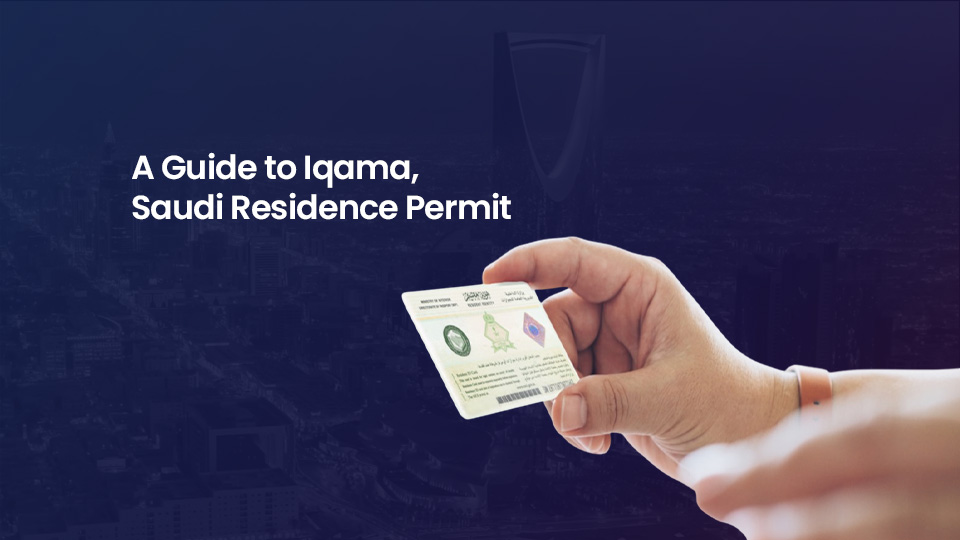
This blog will help you gain a better understanding of the Saudi Arabia iqama. An iqama refers to a residence permit issued by the government of Saudi Arabia. We will discuss the types, requirements, costs, and significance of procuring an iqama in Saudi Arabia.
Professional Insight on Saudi Iqama Regulations
This guide is prepared by our consultants who have real experience working with businesses and expatriates on Saudi work permits, iqama issuance, renewals, and day-to-day compliance matters. It includes helping employers with submissions to the Ministry of Human Resources and Social Development (MHRSD), managing documentation timelines, and handling the requirements set by Saudi labour authorities and the General Directorate of Passports (Jawazat). So, whether you’re an employer onboarding foreign staff or an expat trying to understand the process, you can be confident that the information covered here reflects current regulatory practices in Saudi Arabia.

What is Iqama in Saudi Arabia?
Iqamas refer to residence permits issued by the Saudi government to foreign expatriates employed in the kingdom. An iqama is an official proof of identification for expatriates and gives them access to essential services and rights.

Do You Need an Iqama to Start a Business in Saudi Arabia?
An iqama is a crucial document that is required for foreign investors looking to establish a business in Saudi Arabia. Acquiring a ‘Business Iqama’ becomes the primary step for individuals who are looking to navigate the journey of doing business in Saudi Arabia.
Types of Iqama in Saudi Arabia
The following types of iqamas are issued by the Saudi government based on the purpose of your stay in the kingdom:
- Professional Class Iqama – for those holding professional degrees
- Dependents Iqama – for family members of expatriates
- Government Employees Iqama – for foreigners employed by the Saudi government
- Business Iqama – for businessmen and investors
- Special Privileged Iqama – premium residency iqama
- Domestic Worker Iqama – for those employed as household help
- Labor Class Iqama – for manual job workers
Saudi Iqama Requirements
The following requirements have to be met by expatriates and their sponsoring employees to apply for a Saudi iqama:
- a valid employment contract
- a clean medical certificate attesting to good health
- health insurance
- an active work permit.
Regulatory Framework Governing Iqama
The iqama process is regulated by two primary authorities, the Ministry of Human Resources and Social Development (MHRSD) and the General Directorate of Passports (Jawazat). All employer and employee obligations must adhere to the provisions of Saudi Labour Law, and labour contracts must be registered through the Qiwa portal before iqama procedures can be initiated or approved.
Iqama Issuance Lifecycle Overview
Before we get into the details, let’s take a brief overview of the iqama process structure. Each stage relies on the previous one, skipping or delaying any step can disrupt the entire process:
- Block Visa Allocation
- Work Permit Activation
- Entry Visa Stamping
- Medical and Biometric Registration
- Residency Card Issuance

How to get Saudi Iqama?
1. Apply for a Block Visa:
The first step in the Iqama application process should be taken by your Saudi employer (be it an individual, entity, or company) who sponsors your work permit and iqama application. Your employer will request a block visa from the Saudi Ministry of Labor and Social Development (MLSD), which will reserve a visa slot for your specific position.
2. Obtain Visa Authorization and Power of Attorney:
Following the block visa approval, your employer will need to approach the Ministry of Foreign Affairs for a visa authorization number and power of attorney. These documents enable them to act on your behalf during the visa application process.
3. Apply for a Work Permit:
Once the visa authorization is completed, your employer can apply for a work permit on your behalf. The application will be reviewed by the Ministry of Labor to ensure that you are qualified for the job position.
4. Entry to Saudi Arabia:
You are eligible to enter Saudi Arabia once the work permit is approved by the Ministry and you can start working at your job.
5. Iqama Application:
Within 90 days of your arrival in Saudi Arabia, your employer will initiate the application process for your Saudi iqama. It will require you to undergo a medical examination, submit necessary documents, and give your biometric data.
Technical Platforms Involved in Iqama Processing
The iqama process is digitally managed through various interconnected government platforms. Qiwa handles labour contract registration, Absher and Muqeem oversee residency-related services, and Jawazat, the General Directorate of Passports, manages passport and residency documentation. Before issuing or renewing iqama, the employer must ensure work permit validity, contract registration, and Wage Protection compliance are all followed. Any discrepancies in these systems can lead to processing delays, financial penalties, or suspension of immigration services.

How long is Iqama valid?
An iqama is valid for a 12-month cycle and can be renewed every year. Renewal must be initiated at least three days before its expiry date, and it depends on the validity of the work permit and the sponsoring employer’s regulatory compliance.
How much does Iqama Cost?
We have given below the iqama fees in Saudi Arabia depending on the duration of their validity:
- Iqama Fee for 3 months: SR 163
- Iqama Fee for 6 months: SR 325
- Iqama Fee for 9 months: SR 488
- Iqama Fee for 1 year: SR 650
- Insurance Fee for 1 year SR 600
- Gosi Fee for 1 year SR 800
- ATM Card Fee for 1 year SR 200
Common Challenges in Iqama Issuance and Renewal
While it is a structured process, iqama issuance and renewal often face challenges in reality. The most common reasons are incomplete labour contract registration, lapsed work permits, outstanding government levies, and Wage Protection non-compliance. It’s important to note that often these delays come from the employer’s side, especially when there are discrepancies between records on the Qiwa and Muqeem platforms. Being aware of these factors in advance greatly lowers the risk of application rejections, financial penalties, or service suspension.
Based on our experience handling employer coordination and government submissions, most iqama delays are linked to wage protection discrepancies or lapses in work permit validity, rather than the errors made by the employee.
Disclaimer:
The information in this article is intended for general guidance and reflects regulatory practices at the time of its publication. Saudi labour and immigration regulations are updated regularly, and procedures may change without prior notice. For advice tailored to your specific situation, it is best to consult a qualified immigration or legal advisor.
- FAQs
Frequently Asked Questions
If your question is not addressed here, please feel free to reach out to us. We value your inquiry.
Is Iqama and visa the same?
An iqama and a visa are not the same documents. A visa allows a foreign national entry into Saudi Arabia for a specific purpose such as business, tourism, etc. An iqama is a residence permit that makes it legal for an expatriate to reside and work in Saudi.
Can I stay in Saudi without Iqama?
An expatriate cannot stay and work in Saudi Arabia for a long period without an iqama. A work permit allows you to enter Saudi and begin working here, but you need to obtain an iqama to stay here once the work visa expires.
Is Iqama holder a Saudi citizen?
No, an iqama holder is not considered a Saudi citizen. Iqama grants the holder resident status but not citizenship.
Who can get Iqama in Saudi Arabia?
Any expatriate who has received a valid job offer from a Saudi company is eligible to apply for an iqama.
Who needs Iqama in Saudi Arabia?
Any person looking to reside and work in Saudi Arabia for a long time needs an iqama. This includes foreign employees, dependents of Iqama holders, and self-employed individuals.